Agile vs. Traditional Product Development Processes: Which is Right for Your Business?

Product development processes play a crucial role in determining the success of bringing a new product to market. Two dominant methodologies in this space are Agile and Traditional (Waterfall) product development processes.

Table of contents (7)
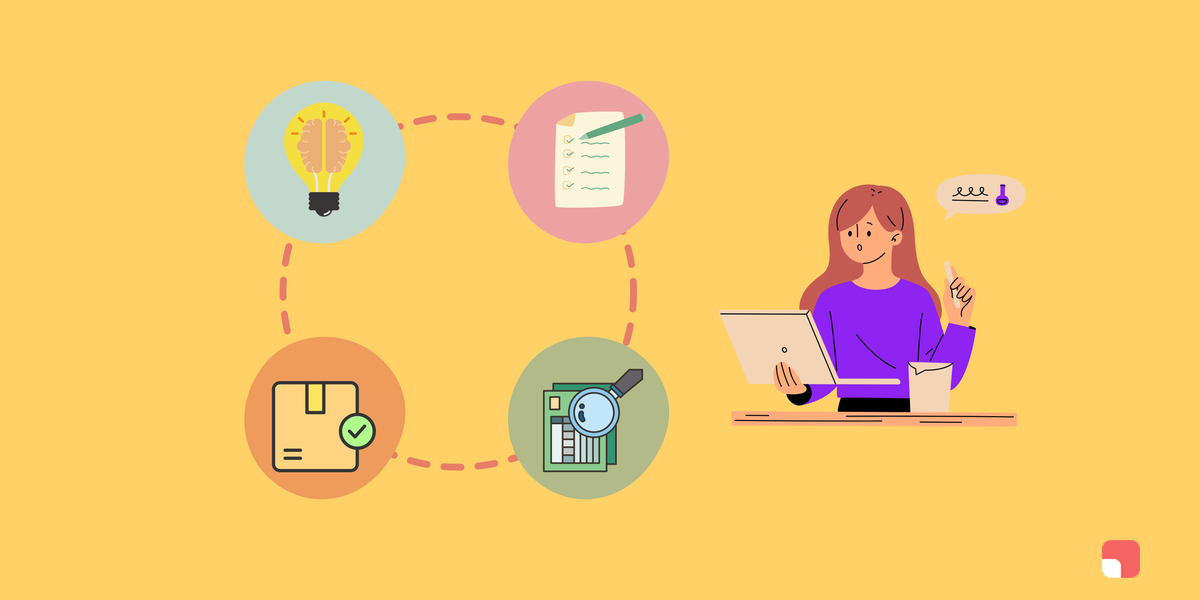
Product development processes play a crucial role in determining the success of bringing a new product to market. Two dominant methodologies in this space are Agile and Traditional (Waterfall) product development processes.
Each approach has its own set of principles, advantages, and challenges. Understanding the differences between them can help businesses make informed decisions about which methodology best suits their needs.
Understanding Traditional Product Development
Key Characteristics
The Traditional product development process, often referred to as the Waterfall model, is linear and sequential.
It consists of distinct phases: requirements gathering, design, implementation, testing, deployment, and maintenance. Each phase must be completed before the next begins, making it a highly structured approach.
Key Activities:
- Requirements Gathering: Detailed documentation of customer needs and project requirements.
- Design: Creating comprehensive designs based on the requirements.
- Implementation: Writing code and developing the product according to the design specifications.
- Testing: Conducting rigorous testing to ensure the product meets the specified requirements.
- Deployment and Maintenance: Releasing the product to the market and providing ongoing support.
Advantages
- Predictability and Structure: The linear nature of Traditional development provides a clear roadmap, making it easier to manage and predict timelines and budgets. This predictability is particularly advantageous in industries where compliance and thorough documentation are mandatory, such as healthcare and aerospace. The structured phases ensure that each aspect of the product is meticulously planned and executed.
- Detailed Documentation: Extensive documentation helps in understanding the complete scope of the project, making it easier to track progress and changes. This can be beneficial for new team members who join the project, as they can quickly get up to speed by reviewing the detailed records.
- Defined Milestones: Clear milestones allow for straightforward progress tracking and accountability. Stakeholders can easily see when specific phases are completed, making it simpler to manage expectations and allocate resources appropriately.
Challenges
- Inflexibility: The rigidity of this approach makes it difficult to accommodate changes once the project is underway. If new requirements emerge or market conditions change, the project may face significant delays and cost overruns. This lack of flexibility can lead to a product that no longer meets market needs by the time it is launched.
- Long Development Cycles: The sequential process can lead to longer development times, which may delay time-to-market. In fast-paced industries, this can be a significant drawback, as competitors may release similar products more quickly.
- Risk of Misalignment: Detailed requirements gathered at the beginning may not accurately reflect changing market conditions or customer needs by the time the product is delivered. This misalignment can result in a product that does not fully satisfy customer expectations, leading to lower adoption rates.
Understanding Agile Product Development
Key Characteristics
Agile product development is an iterative and incremental approach that emphasizes flexibility, collaboration, and customer feedback. Instead of following a linear path, Agile breaks down the development process into small, manageable units called sprints, typically lasting two to four weeks.
Key Activities:
- Sprint Planning: Setting goals and tasks for each sprint.
- Daily Stand-ups: Short, daily meetings to discuss progress and obstacles.
- Development and Testing: Continuous development and testing within each sprint.
- Review and Retrospective: Evaluating the sprint's outcomes and planning for improvements in the next cycle.
Advantages
- Flexibility: Agile allows for changes at any stage of the development process, making it easier to adapt to new requirements or market conditions. This adaptability is critical in industries where technological advancements and consumer preferences evolve rapidly, such as software development and consumer electronics.
- Faster Time-to-Market: Iterative releases enable quicker delivery of functional products to the market. By prioritizing features based on user feedback, businesses can quickly address customer needs and gain a competitive edge.
- Customer Involvement: Regular feedback from customers ensures that the product aligns with their needs and expectations. This continuous engagement helps in building a product that is more likely to succeed in the market, as it directly addresses user pain points and preferences.
Challenges
- Resource Intensive: Agile requires continuous involvement from all team members, which can be resource-intensive. Maintaining high levels of collaboration and communication can strain resources, especially for smaller teams.
- Less Predictability: The iterative nature can make it challenging to predict timelines and budgets accurately. Frequent changes and adjustments may lead to scope creep, impacting project schedules and costs.
- Requires Skilled Teams: Effective Agile implementation requires team members to be well-versed in Agile principles and practices. Training and experience are essential to fully leverage the benefits of Agile, and without this expertise, teams may struggle to manage the process efficiently.
Comparing Agile and Traditional Approaches
Flexibility vs. Predictability
Agile prioritizes flexibility and the ability to respond to change, making it suitable for projects where requirements are expected to evolve. This approach is beneficial in environments with high uncertainty, such as startups or innovative tech companies.
Conversely, Traditional methods offer predictability and structure, ideal for projects with well-defined requirements and minimal expected changes. This predictability is crucial for industries that operate under strict regulatory constraints, such as pharmaceuticals and construction.
Time-to-Market
Agile's iterative approach typically results in faster time-to-market, as functional increments of the product are released regularly. This allows businesses to start generating revenue and gather user feedback early in the development cycle.
Traditional methods might lead to longer development cycles due to their sequential nature. However, this thoroughness can ensure that the final product is robust and fully compliant with all standards, which is essential for products where safety and reliability are paramount.
Customer Involvement
Agile involves customers throughout the development process, ensuring the final product meets their needs. This continuous feedback loop helps in creating products that are user-centric and can adapt to changing customer preferences.
Traditional methods may only engage customers during the requirements gathering phase, potentially leading to a misalignment with customer expectations. However, for projects where requirements are unlikely to change, this initial customer involvement can be sufficient.
Risk Management
Agile manages risk through continuous testing and feedback, allowing teams to identify and address issues early.
This proactive approach helps in mitigating risks before they escalate, ensuring a smoother development process. Traditional methods may encounter higher risks of project failure if issues are discovered late in the process.
However, the structured phases of Traditional development can also provide checkpoints where risks are assessed and managed systematically.
Which is Right for Your Business?
Consider Your Project Type
- Well-Defined Projects: If your project has clear, stable requirements and a defined scope, the Traditional approach may be more suitable. This approach ensures that all aspects of the project are thoroughly planned and executed, reducing the likelihood of unexpected changes.
- Dynamic Projects: If your project is subject to frequent changes and requires ongoing customer feedback, Agile is likely a better fit. This methodology allows for rapid adjustments and continuous improvement, making it ideal for projects in dynamic and fast-paced industries.
Team Expertise
- Agile: Requires teams skilled in Agile methodologies, capable of adapting to rapid changes and continuous collaboration. Team members should be trained in Agile practices and comfortable with the iterative development process.
- Traditional: Suits teams that thrive in structured environments with clear, sequential tasks. This approach works well for teams that prefer detailed planning and clear milestones.
Organizational Culture
- Agile: Best for organizations that value innovation, flexibility, and customer-centric development. Companies with a culture of continuous improvement and adaptability will benefit from Agile's iterative approach.
- Traditional: Fits organizations that prioritize predictability, detailed planning, and formal documentation. Businesses that operate in highly regulated industries or those with a conservative approach to change may find Traditional methods more suitable.
Hybrid Approaches
Some businesses may benefit from a hybrid approach, combining elements of both Agile and Traditional methodologies to leverage the strengths of each.
For example, a project might start with a detailed planning phase (Traditional) and then move into iterative development cycles (Agile) to accommodate changes and gather feedback.
This blended approach can provide the predictability of Traditional methods while maintaining the flexibility of Agile practices.
One crucial consideration when choosing between Agile and Traditional product development processes is the ability to scale and manage complex projects. In large-scale enterprises, integrating Agile practices can be challenging but highly rewarding.
Agile's iterative approach allows for breaking down vast projects into manageable sprints, enabling teams to focus on incremental progress and continuous improvement.
This adaptability is essential in dynamic markets where rapid iteration and responsiveness to customer feedback can significantly enhance product relevance and competitiveness.
On the other hand, the Traditional approach's structured phases and detailed planning are advantageous for projects that require stringent compliance and extensive documentation.
This methodology ensures that each phase is meticulously planned and executed, reducing the risk of oversight in critical regulatory or safety aspects.
Balancing these methodologies within a hybrid framework can provide a robust structure while maintaining flexibility, thus catering to the diverse needs of complex projects.
Understanding your project’s specific demands, the team's expertise, and the organizational culture will guide you in selecting the most effective approach, ensuring successful product development and market introduction.
Choosing between Agile and Traditional product development processes depends on various factors, including project type, team expertise, and organizational culture. Understanding the strengths and challenges of each methodology can help businesses make informed decisions that align with their goals and deliver successful products to the market.
For more detailed insights and comparisons, you can refer to resources such as Asana's guide on product development and SpringerLink's comprehensive analysis of product development methodologies.
By carefully evaluating the needs of your project and the capabilities of your team, you can choose the approach that best supports your business objectives and drives innovation.
Read more

Top 10 Offshore SEO Agencies That Specialize in Link Building

The True Cost of Managing Payroll Without a PEO
What is Outsourcing and How Can It Benefit Your Business?
Get in Touch
Our excellent customer support team is ready to help.
Email address Subscribe Error. Your form has not been submitted This is what the server says: There must be an @ at the beginning. I will retry Reply Uh oh! I will retry

Request Your Invite – Exclusive Roundtable
This invite-only discussion is only for agency owners with 50-200 employees.
Full Name Company website Title Email address Phone number Submit details Error. Your form has not been submitted This is what the server says: There must be an @ at the beginning. I will retry Reply Uh oh! I will retry ×
Offshore Your Dream Global Team
Build your offshore team without the hassle of setting up a local entity.
Get in Touch
Tell us where you are on the decision.
A role you want to hire, a team you want moved, or just the two routes to compare. A named person replies in 4 to 6 hours.
What the first call covers
30 minutesA cost comparison for your headcount, on your numbers, both routes.
- A written cost breakdown
- Entity documents before the call
- PF, ESI, TDS, termination law
- No follow-up sequence
You pick the time, we send a Meet link. Any timezone.